 Save
Save The first time I arranged a board that actually made people stop talking was when I realized it wasn't about perfection—it was about abundance spilling over the edges like an overstuffed velvet curtain at the theater. I'd been to enough fancy gatherings to notice that the most memorable spreads weren't the ones with everything neatly aligned, but the ones that felt genuinely alive, with colors and textures tumbling over the sides as if the board could barely contain the generosity. That's when The Final Curtain was born: a grazing board designed to feel theatrical, luxurious, and gloriously uncontained. It's become my answer to the question "What do I bring to the party?" because it's beautiful enough to photograph and easy enough that I can focus on actually enjoying the moment instead of stressing over presentation.
I remember setting this board up for a small dinner party where half the guests were arriving straight from a theater night, still wearing their coats and talking about the performance they'd just seen. The moment they saw it, someone gasped—actually gasped—and said it looked like the stage design they'd just walked out of. That's when I knew I'd gotten the vibe right: luxurious, dramatic, and impossible to ignore.
Ingredients
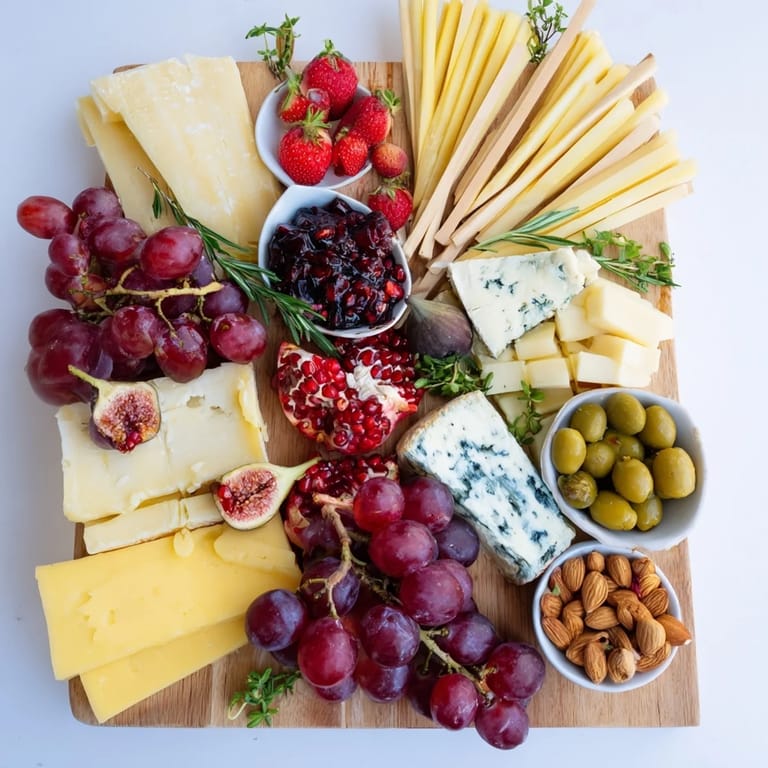
- Brie, sliced into wedges: This is your soft anchor, the ingredient that melts slightly as the board sits out and becomes irresistible on a cracker.
- Aged Cheddar, cut into sticks: The sharpness cuts through the sweetness of the fruit and jam, and sticks are easier to grab than crumbles.
- Blue Cheese, broken into chunks: A little goes a long way here; it's the bold statement that makes people either reach for more or politely pass, and that's perfectly fine.
- Prosciutto, loosely draped: Don't overthink it—loose, casual folds are more elegant than anything military-neat, and they cascade beautifully.
- Soppressata, folded: The slight salt and spice balance all the sweet elements and add visual dimension.
- Red Grapes, on the stem: Keep them on the stem; they're easier to grab and look more luxurious that way.
- Fresh Figs, halved: If you can't find fresh figs, dried figs work beautifully and actually hold their shape better on the board.
- Strawberries, halved: The bright red color is essential to the visual drama, so pick ones that are truly red inside.
- Pomegranate seeds: These jewel-toned seeds aren't just decoration—they add a tart burst that nobody expects.
- Baguette, sliced: Toast the slices lightly so they don't get soggy from the jams and honey.
- Seeded Crackers: They hold up better under cheese and jam than plain ones, and the seeds add texture.
- Fig Jam: Homemade is ideal, but a good quality store-bought version saves time and still tastes like you care.
- Honey: Drizzle it into a small bowl rather than directly on the board so it doesn't stick to everything.
- Marcona Almonds: These buttery Spanish almonds are softer and richer than regular almonds, worth the splurge.
- Olives, green and black, pitted: The contrast of colors matters here, and pitting them beforehand is a kindness to your guests.
- Fresh herbs, rosemary or thyme: Tucking sprigs between ingredients adds an unexpected aromatic element and makes the whole board feel intentional.
Tired of Takeout? 🥡
Get 10 meals you can make faster than delivery arrives. Seriously.
One email. No spam. Unsubscribe anytime.
Instructions
- Choose your stage:
- Pick a large wooden or marble board and position it near the edge of your table where people naturally gather. The board itself is part of the presentation, so choose one you love.
- Create the cheese cascade:
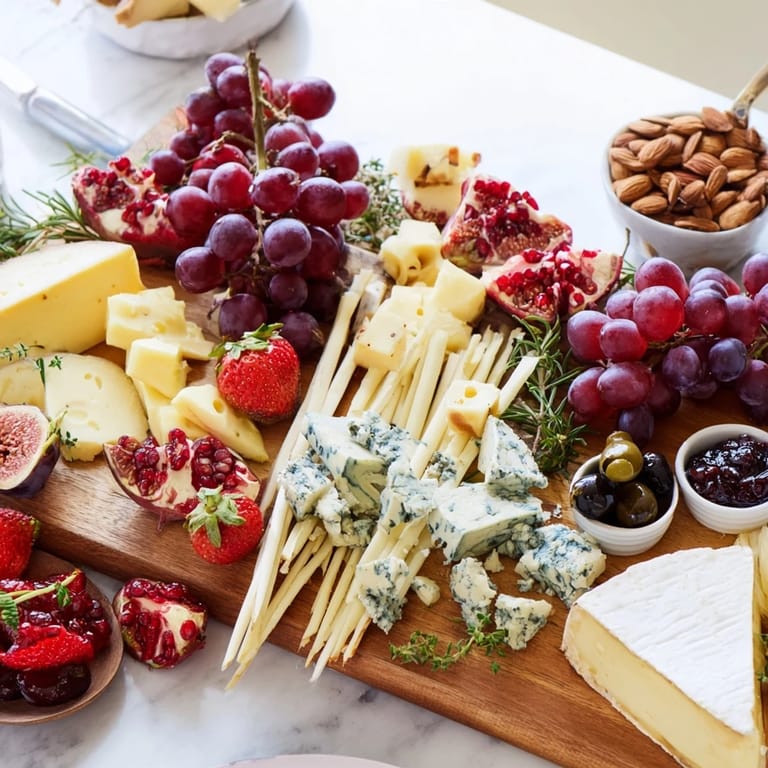
- Arrange your brie wedges, cheddar sticks, and blue cheese chunks so some pieces intentionally hang over the edge, mimicking velvet curtains draping off a stage. Let them tumble a little—that's the whole point.
- Layer in the charcuterie with drama:
- Fold the prosciutto loosely and arrange it so it catches light and shadows, then weave in the soppressata with the same theatrical touch. Think of it like setting the scene, not organizing a file.
- Scatter the fruit like jewels:
- Tuck grapes still on their stems, halved figs, strawberries, and pomegranate seeds into the gaps, letting some fruit trail over the edges in a flowing, unplanned-looking way. The randomness is what makes it feel alive.
- Angle your bread and crackers:
- Fan the baguette slices and seeded crackers alongside the cheeses, allowing them to lean slightly off the board's edge rather than lying flat. This adds dimension and makes them easy to grab.
- Nestle the condiments:
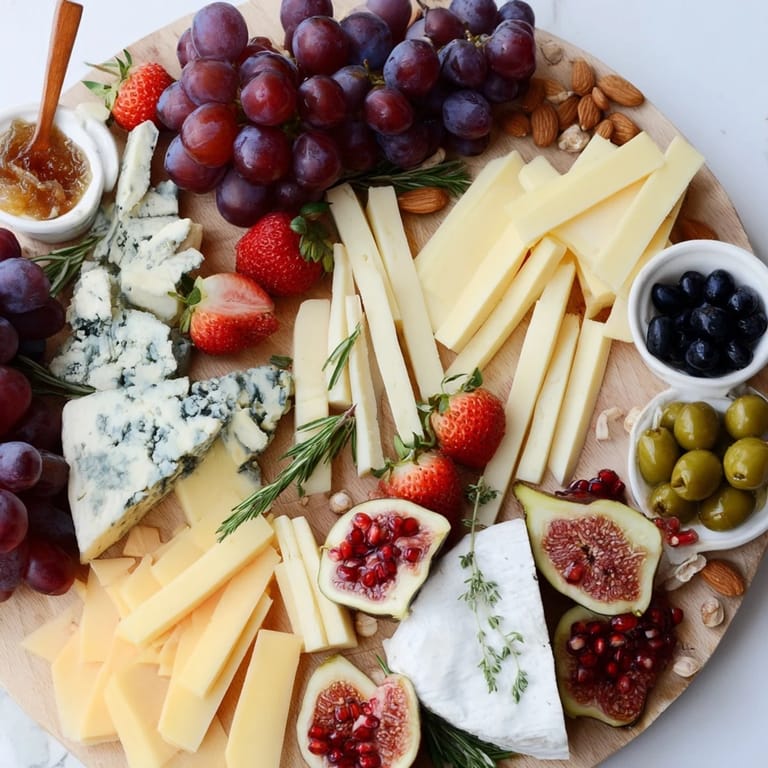
- Place small bowls of fig jam, honey, olives, and almonds directly on the board, positioning them in pockets created by the cheeses and fruit. They should feel like part of the landscape, not an afterthought.
- Garnish with intention:
- Tuck fresh rosemary and thyme sprigs between ingredients, letting them weave through the composition. A few herb sprigs transform it from assembled to arranged.
- Serve with confidence:
- Step back, take a moment to admire what you've created, then invite people to graze freely. The beauty of this board is that it invites touch and interaction.
 Save
Save There was a moment at that dinner party when the conversation just naturally moved around the board, people leaning in to discover a new flavor combination they hadn't expected. That's when it clicked for me that a grazing board is really just an edible conversation starter, a way of saying you've thought about what brings people together without making it feel fussy or formal.
The Art of Visual Drama
The curtain concept isn't just pretty—it's actually functional. When ingredients cascade off the edges, they become easier to reach, and the board naturally feels fuller and more generous than if everything were contained neatly in the center. I've found that asymmetry is your friend here; groups of three or five create more visual interest than even numbers, and varying the heights of your ingredients draws the eye around the entire composition. The overhanging elements also catch light differently, which adds dimension that a flat arrangement would never achieve. Think of it like staging a scene rather than organizing a pantry.
Pairing and Flavor Combinations
One of the unexpected lessons from serving this board repeatedly is that people's flavor combinations are wildly different, and that's the entire charm. Someone will pair blue cheese with fig jam and pomegranate in a way that sounds unusual until they taste it and their eyes light up. The honey and brie combination seems obvious until someone discovers it drizzled over a piece of cheddar and crispy cracker instead. The sweet fruit, salty charcuterie, tangy cheese, and aromatic herbs create a landscape where almost any combination works, and the casual grazing format encourages experimentation in a way a plated dish never could. This is why I always make sure there's enough variety that every person at the table finds at least two flavor paths they love.
Making It Your Own
The beauty of this board is that it's genuinely adaptable without losing its character. I've made vegetarian versions by doubling down on cheese varieties and adding more nuts and dried fruits for richness, and they're just as stunning. In spring, I swap in fresh apricots and edible flowers; in autumn, I add roasted walnuts and dried pears. The structure stays the same, but the personality shifts with the season and what's available. One thing I've learned is that expensive ingredients aren't what make this board special—it's the thoughtfulness of the arrangement and the confidence of the cascade.
- Add edible flowers like nasturtiums or pansies for unexpected pops of color and a delicate flavor.
- If you're going fully vegan, swap the cheeses for high-quality plant-based varieties and still arrange them with the same theatrical flair.
- Keep a small cutting board and knife nearby so guests can slice larger pieces of cheese if they prefer, rather than crowding the main board.
 Save
Save This board has become my shorthand for saying "I'm so glad you're here, and I want you to feel celebrated." It's food that tastes like you went to great effort, looks like you have impeccable taste, and actually takes barely any time at all—which feels like the best kind of magic in the kitchen.
Recipe FAQ
- → What cheeses work best for this board?
Brie, aged cheddar, and blue cheese provide a variety of textures and flavors that balance creamy, sharp, and tangy notes beautifully.
- → Can the charcuterie be omitted?
Yes, for a vegetarian or vegan option, exclude the meats and use plant-based cheese alternatives if desired.
- → How do I achieve the cascading presentation?
Arrange cheeses and charcuterie so some pieces spill over the board edge, mimicking draped curtains for a dramatic, visual effect.
- → What fruits complement this board?
Fresh grapes, figs, strawberries, and pomegranate seeds add sweetness and vibrant color, enhancing the overall balance.
- → What beverages pair well with this board?
A crisp rosé or sparkling wine complements the assortment’s rich and fresh flavors, enhancing the tasting experience.
- → Are there any allergen considerations?
This board contains dairy, tree nuts, gluten, and possibly sulfites; check ingredients carefully if allergies are a concern.